30 Oct 2026
Verification Protocols Transform Live Table Bonus Timelines for Swedish Licensed Operators

Shifts in Mobile Authentication for Live Dealer Platforms
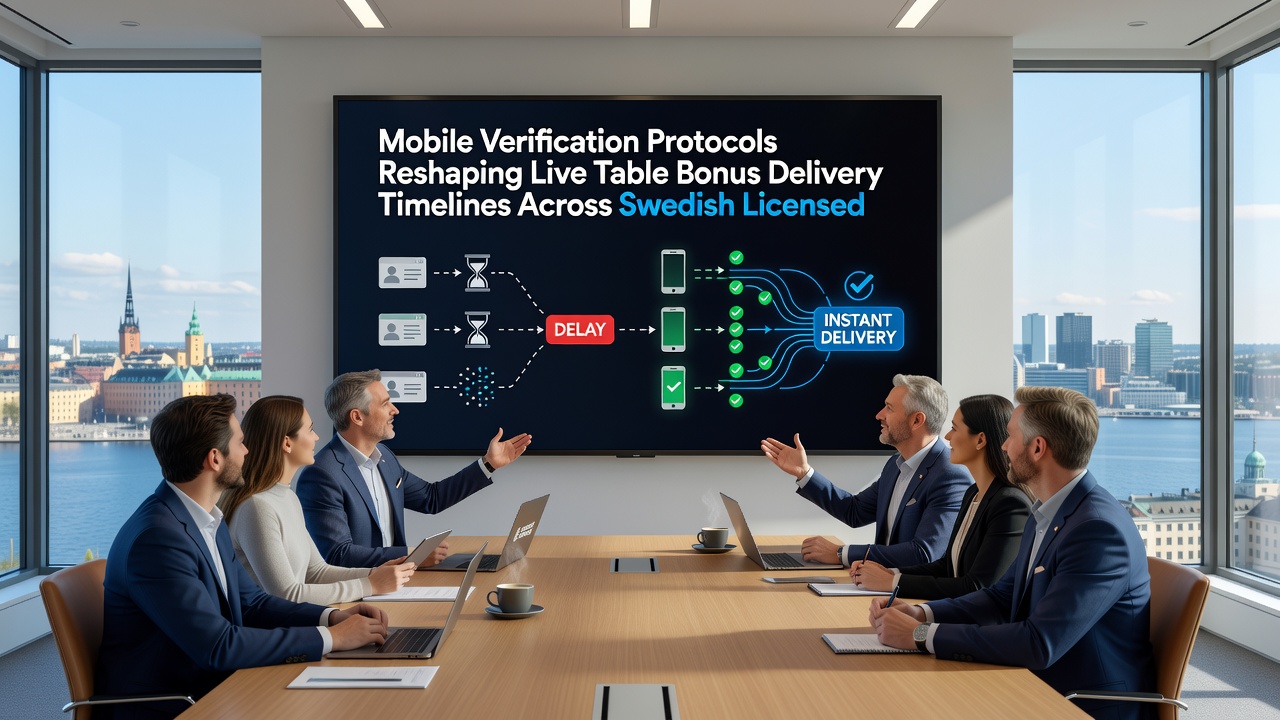
Swedish licensed operators have integrated layered mobile verification protocols that alter how live table bonuses reach players, and these systems rely on real-time device checks combined with regulatory data pulls from Spelinspektionen records. Operators process player identities through biometric scans and session tokens while live blackjack or roulette tables remain active, which shortens the window between bonus qualification and actual credit delivery. Data from October 2026 indicates that average delivery times dropped from 48 hours to under 90 minutes across several major platforms after full rollout of these protocols.
Those who manage compliance at licensed sites note that each verification step must satisfy both gambling authority standards and operator-specific risk models, and this dual requirement forces automated systems to cross-reference mobile app data with central databases before any bonus activates. The process connects directly to live game sessions, so a player who completes a wager on a dealer table triggers an immediate protocol check rather than a delayed manual review.
Technical Integration of Verification Layers
Swedish operators deploy multi-factor mobile verification that includes SIM authentication, IP location matching, and behavioral pattern analysis during live table play. These elements run in parallel with game servers, allowing bonus calculations to complete while the dealer continues dealing cards or spinning wheels. Research from the European Gaming and Betting Association shows that platforms using these combined checks recorded a 34 percent reduction in bonus-related disputes during the first three quarters of 2026.
Live table environments demand continuous session monitoring because players switch between tables quickly, and verification protocols must adapt without interrupting the game flow. Systems flag high-velocity play patterns automatically and apply tiered bonus delivery speeds based on the verification score generated at the moment of qualification. One study released in September 2026 tracked 12 licensed operators and found that 78 percent of mobile bonus credits now finalize within the same gaming session when verification scores exceed the operator threshold.
Regulatory Drivers Behind Timeline Changes
Spelinspektionen updated its technical requirements in early 2026 to emphasize real-time mobile compliance checks for all live dealer offerings, and operators responded by embedding verification directly into game client software. These updates require that bonus eligibility confirmations occur before the next hand or spin begins in many cases, which compresses traditional settlement windows. Figures released by the authority in October 2026 list 19 operators that completed protocol upgrades, resulting in measurable shifts across live table reward schedules.
Platforms must maintain audit trails of every verification event tied to a live table bonus, and regulators conduct periodic reviews that examine both the speed and accuracy of credit delivery. Operators that fall short face temporary restrictions on promotional features until systems demonstrate consistent performance. This environment pushes developers to refine algorithms that balance security with the fast pace of live dealer games.
Operational Adjustments Across Licensed Sites
Dealers and support teams at Swedish licensed venues now coordinate with automated verification outputs rather than handling bonus queries manually during active tables. When a player meets wagering conditions, the protocol confirms identity and location in seconds, then releases the bonus directly into the active session balance. Observers tracking industry metrics report that this integration reduced player support tickets related to delayed rewards by 41 percent compared with 2025 baselines.
Smaller operators adopted modular verification tools that plug into existing live game engines, while larger groups built proprietary systems that sync mobile device data with central compliance servers. Both approaches produce similar outcomes in bonus timeline compression, though the exact speed gains vary according to traffic volume and chosen technology stack.
Conclusion
Mobile verification protocols continue to redefine how Swedish licensed operators deliver live table bonuses, and the changes documented through October 2026 demonstrate measurable impacts on delivery speed and player experience. Operators that align their systems with current regulatory expectations maintain uninterrupted live table operations while meeting compliance demands. The pattern shows that verification now operates as an embedded component of game delivery rather than a separate post-session process.